Global sourcing & import specialist — serving Canada & the USABased in Surrey, BC Get a quote →
Build your own brand

You sell it. We make it happen.

We help you sell your own brand — your name on the product, your box, your label — instead of reselling somebody else's. You do two things: sell it, and know your market. We find the product, improve it, get a sample made, put your name on it, have it produced, check it, ship it, and keep it coming so you never run out.

A real sample in your hands first The brand stays yours One contact, here in Canada
The big idea

Your own brand — your name on the product, your box, your label.

Right now you might be reselling somebody else's product. This is the other way round: the product is made for you, and the name on it is yours. Same customers, same shelf — but it is your brand they come back for.

You do two things: sell it, and know who buys it.
We do everything else.

Your job

You sell.

  • Know your customers — who actually buys this.
  • Know what price they will pay.
  • Sell it, and take the orders.
  • Own the brand name. It is yours, not ours.

That is the whole list. Four things you are probably doing already.

+
Our job

We supply.

  • Find the right factory for your product.
  • Develop and improve the product itself.
  • Get samples made so you can hold one.
  • Put your name and your packaging on it.
  • Check the quality before anything ships.
  • Ship it, and clear it through customs.
  • Keep the supply coming, run after run.

One contact for all of it. And one all-in price — a single number that covers the whole job, worked out for your product.

What this picture means: your job is selling. Our job is making sure you always have something to sell.

How it works

From your idea to a product with your name on it.

Seven steps. Look at the little grey and green labels: grey means you do it, green means we do it. There are only two grey ones.

1
You do this

You tell us the product and who buys it.

A phone call or an email is enough to start. What is the product? Who buys it? What do they pay for it now? If you already sell something similar, tell us what you like about it and what annoys you and your customers about it.

What it isWho buys itWhat it sells for
2
We do this

We research the product and the factories that can make it.

We go and find the factories that really make this kind of thing — not agents or middlemen with a website. We check they exist, check what they have made before, and check they can make the quantity you need at a cost that leaves you a profit.

3
We do this

We develop and improve it.

This is the product development part, often called R&D. We look at the materials, the design, how it is put together and what it costs to build. Then we change what needs changing — to make it work better, to bring the cost down, or to suit buyers in Canada and the USA.

MaterialsDesignCostLocal rules
4
We do this

We get a sample made and send it to you.

Before anybody makes a hundred of them, one gets made. It comes to you so you can hold it, use it, show it to a customer, and tell us what is wrong with it. If it is not right, we change it and do another one.

5
You do this

You approve the sample and your branding.

You say yes to the product, and yes to how your brand looks on it — your name, your logo, your colours, your box and your label. Nothing goes into full production until you have said yes in writing.

Your nameYour logoYour box
6
We do this

We run the full production, checked before it ships.

Your branding goes on, the full run is made, and it is inspected before it leaves the factory — not after it lands here. Then we book the shipping, handle the paperwork and clear it through customs to your door.

7
We do this

We keep supplying you, on repeat.

This is the part people forget. Selling out sounds good until you have nothing to sell for three months. We plan the next run before you get low, so your shelf stays full and your customers keep coming back to your name.

What this list means: out of seven steps, only two are yours — telling us the idea, and approving the sample.

An inspector checking finished parts on a bench before they are packed for shipping
Nothing ships until it has been checked.

What you will actually see from us

No mystery, no guessing. At each stage you get something real in your hands or your inbox.

  • A written plan and one all-in price, before you commit to anything.
  • A physical sample you can hold, use and show to a customer.
  • Photos and a written report from the quality check at the factory.
  • A shipping date, and an honest update if that date moves.
  • A plan for the next production run, agreed before you get low.
In plain words

What "product development" actually means.

People call it R&D, which makes it sound like laboratories and white coats. It is simpler than that. It means we change the product until it is a better thing to sell.

1

We make it work better

Stronger where it breaks. Easier to use. Fewer parts that wear out. We look at what goes wrong with the product people sell today, and we design that problem out of yours.

2

We make it cheaper to build

Without dropping the quality — that part matters. A different material, a simpler part, a smarter box, a factory that is better set up for it. Every dollar we take out of the build is a dollar more profit for you.

3

We make it suit buyers here

Canada and the USA are not the same market as everywhere else. Voltages and plugs, sizes and fittings, the language on the box, and the safety approvals a product has to pass before it can be sold here. We change the product so it fits.

And then we do it again. We test it, change it, and test it again until it is right. That is the whole point of doing a sample first. If the first one is wrong, that is a normal part of the job — it just means the next one is better.
Steel and aluminium stock stacked ready for production
Choosing the materials
A CNC machine cutting a metal part inside a factory
Making the first one
A robotic welding arm joining a metal assembly on a production line
Improving how it is built
A finished part being measured and tested during a quality check
Testing it, then testing it again

What these pictures mean: developing a product is four ordinary steps — pick the materials, build one, improve it, test it.

What you get

Everything below is part of the service.

These are not extras billed one at a time. They are the job. Your quote is one all-in price for the lot, worked out for your product.

Finding the product and the factory
Real makers, checked by us — not agents with a nice website.
Product development (R&D)
Making it work better, cost less, and suit buyers here.
A real sample in your hands
Hold it, use it, show it to a customer — before any full run.
Your brand on the product
Your name, your logo and your colours, put on properly.
Your packaging
The box, the label and the printing on it, made to match.
Quality checked before it ships
Caught at the factory, where it can still be fixed.
Shipping, paperwork and customs
Booked, documented and cleared, through licensed brokers.
Repeat production runs
Planned ahead so the next lot is coming before you need it.
Your own brand, made, packed and delivered on repeat
One contact. One all-in price — one number for the whole job.

What this stack means: every line above is included, and the green bar at the bottom is what you actually end up with.

Import duties and taxes (the charges the government adds when goods come into the country), and any safety approval a product has to have, are worked out for each shipment and each destination. We show them to you separately, so you can see exactly what they are.

Consistent supply

The hard part is not the first order. It is the fifth one.

A brand only works if the product is there every time somebody asks for it. So we do not treat your order as a one-off. We plan the next run while you are still selling the last one.

You never run out
A supply that repeats
Step 1

We watch your stock

You tell us what you are selling and how fast. We keep track of how much you have left and how long it will last.

Step 2

We book the next run early

The factory is booked and the materials are lined up well before your shelf gets low — not on the day it runs dry.

Step 3

It is checked and shipped in good time

The new lot is inspected, then put on the ship while you still have stock to sell. Sea freight takes weeks, so we start early.

Step 4

It lands, and it starts again

It clears customs and arrives at your door. Your shelf is full again, and the cycle begins over for the run after that.

What this circle means: it is a loop, not a one-off order — the next batch is already being made while you sell this one.

The honest comparison

Doing it on your own, or doing it with us.

You can absolutely do this yourself. Plenty of people try. Here is what usually gets in the way, and what changes when somebody does it with you.

Doing it on your own

  • Working out which factory is real, and which is a middleman with a good website.
  • A minimum order — the smallest number the factory will make — far bigger than you could ever sell.
  • A sample turns up looking nothing like the photos you were sent.
  • Something is wrong with the batch and there is nobody over there to fix it.
  • Shipping bookings, customs paperwork and duties to figure out yourself.
  • You sell out, and then wait months with nothing on the shelf.

With Greenery

  • One contact here in Canada, from the first phone call to the delivery.
  • Factories we have checked ourselves, for the product you actually want.
  • A sample in your hands before a single full production run is made.
  • Quality checked at the factory, while it can still be put right.
  • One all-in price for the whole job, so you can work out your profit before you start.
  • A repeat supply planned ahead, so you do not run dry.

What this comparison means: the left side is a list of problems. Our job is to be the person who deals with them.

Who this is for

You do not need a factory. You need customers.

If you already know who buys your product and what they will pay, you have the hard part. Here are the three kinds of people this is built for.

Shelves of boxed stock in a distribution warehouse Shops & distributors

You resell — and you want your own line

You already move somebody else's product every month. Put your own name on it instead. The customers stay the same, but the brand they remember becomes yours — and so does the profit that used to go to the supplier. It works the same whatever you sell: filters and bearings, hand tools, solar panels, or a full range of furniture, lighting and home decor.
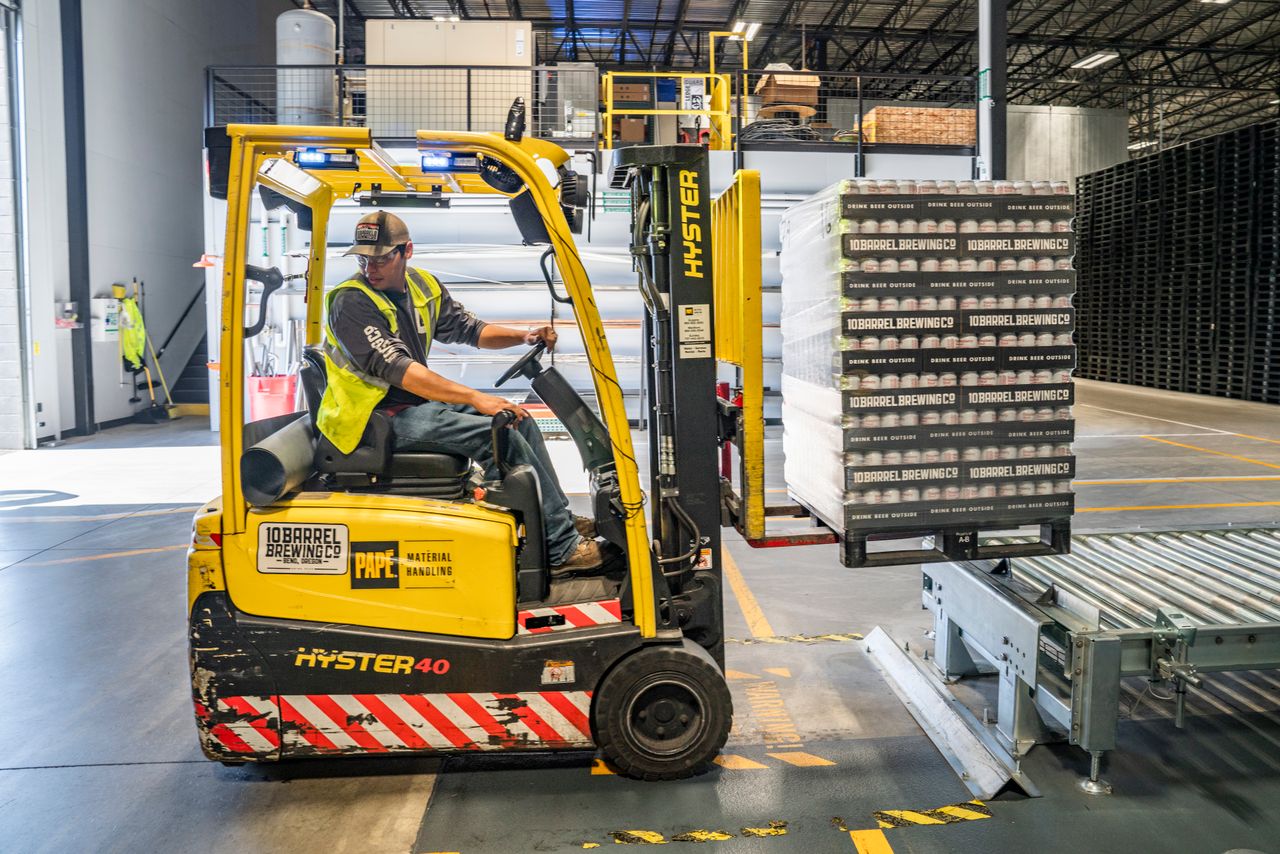

A forklift moving pallets of goods inside a busy warehouse Growing businesses

You want control of price and quality

When you buy from a distributor, they set the price and they choose the quality. When the product is made for you, those two decisions come back to you — and so does the ability to fix something your customers keep complaining about.

Two people shaking hands over a table after agreeing a deal New ideas

You have an idea and buyers, but no factory

You know the product should exist, and you know people who would buy it. What you do not have is a way to get it made. That is the gap we fill — from a sketch or a rough description through to a boxed product with your name on it.

What these three have in common: they all have buyers already. None of them owns a factory — and none of them needs to.

Not just machinery

Own-brand works for far more than big machines.

People assume this only applies to large equipment. It does not. Some of the best own-brand products are the small, boring things your customers buy again and again. Furniture and home decor is a good example — sofas, beds, dining sets, desks, lighting, rugs and mirrors can all be made to your design, with your label on them.

Spare parts & consumables

Bearings, belts, filters, seals, lubricants and welding supplies — the things people reorder, boxed under your name.

Raw materials

Steel, aluminium and plastics, cut and supplied in the sizes and grades you ask for.

Tools

Hand tools, workshop kit and attachments, with your name on the handle.

Clean energy

Solar panels and parts, battery storage and electric-car charging gear, under your own label.

Automation & robotics

Sensors, controls and robot arms — the kit that helps a workshop do more with fewer hands.

Furniture & home decor

Your own line of furniture, lighting or homeware, made to your design and your label.

What these six mean: if a factory can make it, your name can go on it — a spare part, a material, a tool, solar and battery gear, a robot, or the furniture and decor that fills a room.

Straight answers

The questions people actually ask.

Including the awkward ones. We would rather tell you now than have you find out later.

Do I need to be a big company to do this?

No. But you should know that every factory sets a minimum order — the smallest number they are willing to make in one go. That number is real and we cannot wish it away. What we can do is choose factories and products where the minimum is as low as possible, and tell you the honest number before you spend anything. If a product's minimum is bigger than you can sell, we will say so rather than let you order it.

Who owns the brand — me or you?

You do. It is your name, your logo, your box and your customer list. We are the people who make and supply the product behind it. Registering that name as a trademark is a separate legal step, and it stays yours to do — we will tell you when it is the right moment to speak to a lawyer or a trademark agent. Because you are the brand owner, product liability sits with you too. We help with sourcing, product development and supply; we do not give legal advice, and we will say plainly when you need someone who does.

How long does the whole thing take?

Honestly, it depends on the product, and anyone who gives you a single number before seeing it is guessing. The order is always the same though: research first, then a sample, then your approval, then production, then shipping. A simple item moves much faster than a complicated one. We give you a real timeline in writing with your quote, and if a date moves we tell you as soon as we know — not after it has already slipped.

Can I change the product later?

Yes, and most people do. That is exactly what product development is for. After your first run you will hear things from your customers that nobody could have predicted. We can change materials, sizes, colours, fittings or packaging for the next run. Small changes are usually easy. Bigger changes may need a new sample first, and we will tell you which one you are looking at.

What do I actually have to do?

Two things. Sell it, and know your market — who buys it, why, and what price works. On top of that there are two moments where we need you: telling us the idea at the start, and approving the sample and your branding before production. That is it. You do not need to speak to a factory, book a container, or fill in a customs form.

What does it cost?

There is no price list, because no two products are the same. We price each job on its own, as one all-in price — the product, the development work, your branding and packaging, the quality checks, the shipping and the customs clearance, in one number, delivered to your door. That way you can work out your profit before you commit to anything. Import duties and taxes are set for each shipment and each destination, so those are shown to you separately rather than buried in the total.

Tell us the product. We will tell you what it takes.

Send us what you want to sell, who buys it, and roughly how many you think you can move. We will come back with a plain-English plan, a route to a sample, and one all-in price. No jargon, and no obligation.

Greenery Import Export Ltd. · Surrey, BC · Serving Canada and the USA